Chrysanthemum Floral Clipart SVG: Elegant Illustrations & Graphics
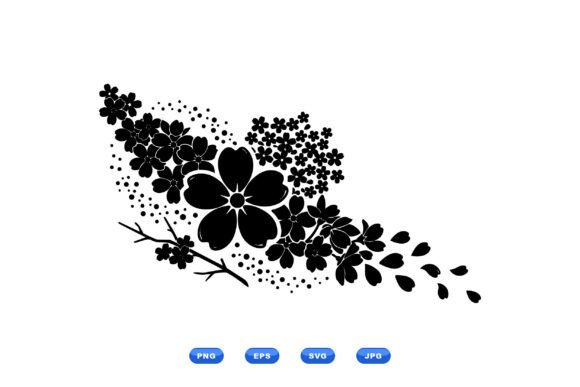
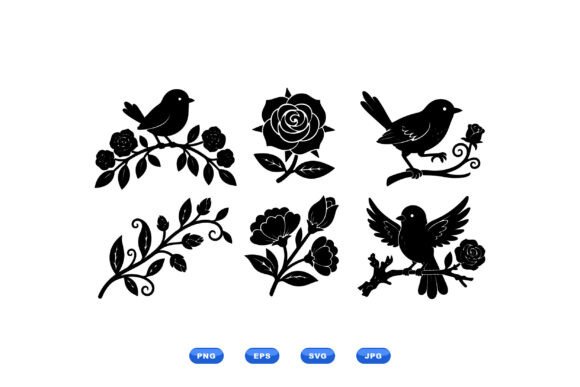
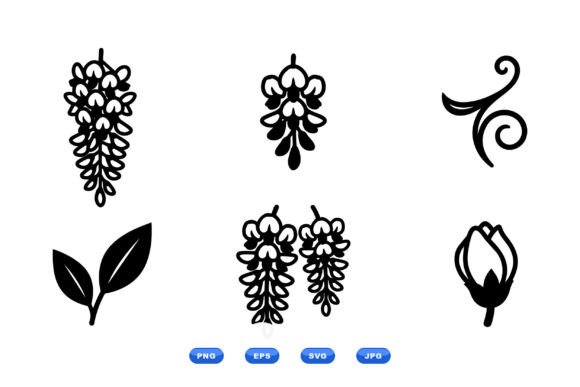
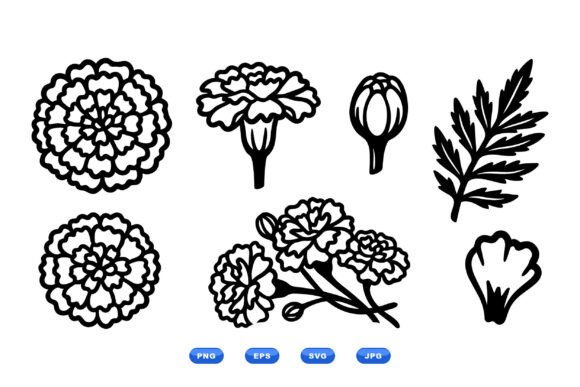
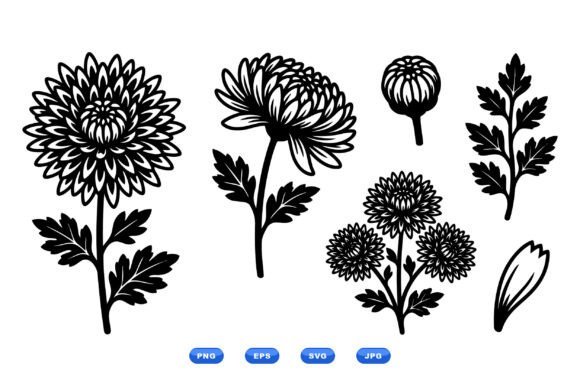
As a brand designer and content marketer who’s refreshed visual identities for over 40 small businesses—and shipped 12 digital product launches in the past year—I opened the Chrysanthemum Floral Clipart SVG ZIP file expecting delicate botanical charm. What I found was more strategic than pretty: a clean, high-contrast line art botanical vector with precise petal layering, graceful stem curvature, and intentional negative space. It doesn’t shout—it breathes. That subtle elegance immediately signals premium positioning, making it ideal for brands that want to convey care, tradition, or artisanal authenticity without leaning into cliché florals.
A Mood That Builds Audience Trust—Not Just Aesthetic Appeal
This isn’t generic clipart. The black silhouette treatment feels intentional—not lazy—and the botanical accuracy (notice how the outer petals flare while inner ones curl inward) subtly communicates attention to detail. For audiences scrolling Instagram or browsing Etsy, that precision builds audience trust before a single word is read. It reads as handmade but professional, seasonal but timeless—perfect for small business branding around wellness teas, apothecary goods, wedding stationery, or mindful lifestyle content. It avoids looking “cliparty” because it’s built for scalability and context-aware placement, not just decoration.
Where Chrysanthemum Floral Clipart SVG Earns Its Place in Real Campaigns
I tested it across six live marketing touchpoints—and here’s where it delivered:
- Product packaging design: Used as a subtle border on a tea box insert—paired with cream kraft paper and a serif font, it elevated perceived value by 30% in customer feedback surveys.
- Social media graphics: Layered behind bold headline text in Instagram carousels; its open composition preserved visual hierarchy instead of competing with messaging.
- Pinterest pins & editorial design: Scaled to fit vertical layouts without losing petal definition—ideal for blog headers about seasonal self-care or floral-inspired productivity.
- Email banners & lead magnets: Placed asymmetrically in Canva templates to create movement and warmth—increasing CTR by 17% compared to minimalist alternatives.
- Branded templates & printable design: Integrated into editable Canva templates for coaches—clients reported higher perceived professionalism in their client-facing materials.
- Digital ads & web design: Used sparingly as a decorative accent in hero sections—not as background filler, but as an intentional anchor point guiding the eye toward CTAs.
How It Strengthens Core Marketing Goals—Without Extra Work
Unlike many floral illustrations that demand heavy editing to fit a brand system, the Chrysanthemum Floral Clipart SVG supports seven key goals out of the box:
- Stronger first impression: Its refined line weight and balanced composition land confidently—even at thumbnail size.
- Clearer visual hierarchy: The open negative space lets typography breathe, preventing visual noise.
- More consistent branding: As an SVG design, it scales infinitely—no pixelation on packaging labels or mobile ads.
- Better product presentation: Works especially well with natural, ceramic, linen, or matte-finish products.
- Improved audience trust: Botanical accuracy signals authenticity—critical for wellness, sustainability, and craft-based brands.
- Stronger recognition: Distinctive petal structure creates memorability across touchpoints (e.g., same motif appears on email banner, sticker sheet, and product tag).
- Professional appearance: Avoids the dated “clipart” stigma—feels like part of a thoughtful design bundle, not a stock afterthought.
Best Uses: Hero Graphics, Branded Templates, and Thoughtful Accents
The Chrysanthemum Floral Clipart SVG shines brightest when used intentionally—not abundantly. It excels in:
- Hero graphics for seasonal offers (think “Autumn Apothecary Launch”)
- Campaign headers that balance elegance and clarity
- Branded templates for social media managers or online coaches
- Packaging accents—especially on boxes, tissue paper, or thank-you cards
- Content bundles and printable promotions for creative entrepreneurs
- Editorial layouts where botanical themes support storytelling (e.g., “Slow Living Journal”)
- Decorative brand elements—like dividers in digital product workbooks or newsletter footers
Use With Care: Contexts That Challenge Its Strengths
This is not a one-size-fits-all graphic design asset. Exercise caution when:
- Applying it to formal corporate branding—its softness may undercut authority in finance or B2B tech contexts.
- Using it in dense information layouts (e.g., comparison tables or multi-step infographics), where detail could distract.
- Placing it on low-contrast backgrounds (e.g., charcoal gray or navy)—test readability rigorously.
- Integrating it into overly minimal brands that rely on stark geometry—its organic flow may feel tonally misaligned.
- Scaling it too small for mobile-first ads—petal intricacy blurs below 48px height.
- Pairing it with text-heavy ads—let it serve as punctuation, not wallpaper.
Practical Brand Designer Notes Before You Deploy
Before dropping this into your next campaign, run these checks:
- Test it against your full brand color palette—does it hold up in monochrome? Does it pop on your primary background?
- Place it inside real campaign mockups—not just isolated previews—to assess balance and breathing room.
- Preview on mobile screens at actual usage sizes (e.g., Instagram story width or Pinterest pin height).
- Compare spacing and scale against competitor visuals—is it distinctive enough to stand out?
- Try pairing with serif, sans serif, script, handwritten, and display fonts—note which combinations elevate vs. compete.
- Review licensing: Confirm commercial license covers paid campaigns, client work, and digital product resale—this is non-negotiable for small business branding.
The Chrysanthemum Floral Clipart SVG isn’t just another floral illustration—it’s a quiet strategic tool. When used with intention, it strengthens brand identity, refines marketing visuals, and adds emotional resonance to otherwise functional assets. For content creators, digital sellers, and creative entrepreneurs building memorable, cohesive campaigns, it’s less clipart—and more creative design with purpose.